
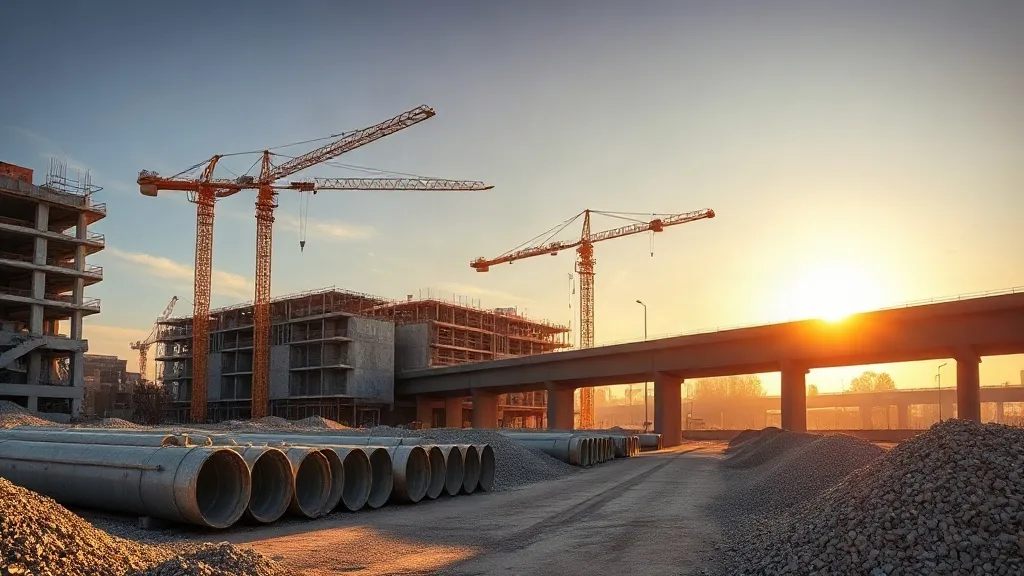
When a building materials giant like CRH adjusts its earnings outlook upward, it's more than just a headline number. The company's decision to lift its full-year adjusted EBITDA guidance to a range of $7.8 billion to $8.0 billion offers a window into the health of infrastructure spending, construction trends, and the broader industrial economy. For investors with a long-term horizon, these signals matter far beyond the next quarterly report.
CRH, formerly Cement Roadstone Holdings, has transformed itself into a global player in aggregates, cement, and asphalt products. Its footprint spans North America and Europe, giving it exposure to both public infrastructure projects and private construction activity. The guidance upgrade, while specific, carries implications that ripple through the investment thesis. Below, we break down three key takeaways that long-term investors should consider.
1. Infrastructure Spending Remains a Powerful Tailwind
At the heart of CRH's improved outlook is sustained demand from infrastructure projects. Governments in the United States and Europe have been allocating significant funds to modernize roads, bridges, and public facilities. In the U.S., the Infrastructure Investment and Jobs Act, passed in 2021, continues to deploy capital into transportation networks and utilities. Europe has its own initiatives aimed at upgrading aging infrastructure and supporting the green transition.
For CRH, these projects translate directly into orders for aggregates, cement, and asphalt. The company's vertically integrated business model allows it to capture value across the supply chain, from raw material extraction to finished paving. This integration provides a competitive edge and helps stabilize margins even when input costs fluctuate.
Long-term investors should view this as a multi-year runway. Infrastructure spending is notoriously slow to materialize, but once projects break ground, demand for materials tends to be steady and predictable. CRH's guidance upgrade suggests that the company is already seeing the benefits and expects the momentum to continue through the year.
Why It Matters for the Long Haul
Infrastructure cycles can last a decade or more. The current wave of spending is not a short-term stimulus but a structural shift toward repairing and expanding public assets. For patient investors, this creates a visible revenue stream that is less susceptible to consumer sentiment than residential construction. Moreover, many of these projects are funded by government budgets, which are less cyclical than private sector spending.
CRH's ability to secure long-term contracts and maintain pricing power in this environment is a key component of its investment appeal. The guidance raise reinforces that the company is not just participating in the trend but thriving within it.
2. Pricing Power and Operational Efficiency Underpin Margins
Rising costs have been a challenge across the construction sector, from energy to labor. Yet CRH has managed to not only maintain but improve its margin outlook. The company's updated EBITDA guidance implies stronger profitability, which speaks to its pricing power and operational discipline.
In the aggregates and cement business, pricing is often sticky. Once contracts are set, they tend to include escalation clauses that pass through cost increases. Additionally, CRH has invested in efficiency measures, such as optimizing plant utilization and logistics. These efforts help offset inflationary pressures and protect the bottom line.
For investors, margin resilience is a critical factor in long-term returns. Companies that can expand margins during inflationary periods often emerge stronger when costs eventually stabilize. CRH's guidance upgrade is a testament to its ability to navigate a complex cost environment while still delivering value to shareholders.
It's also worth noting that CRH has been actively managing its portfolio, divesting non-core assets and focusing on higher-margin segments. This strategic clarity enhances its operational performance and reduces complexity, making it easier for investors to understand and value the business.
The Bigger Picture on Profitability
Margin improvements are not just about short-term gains; they signal a company's competitive advantage. In a sector where scale and logistics are crucial, CRH's size and network effects create barriers to entry. The guidance raise indicates that these advantages are translating into tangible financial results, which should comfort long-term holders.
3. Capital Allocation and Growth Prospects
CRH has a long history of creating shareholder value through disciplined capital allocation. The company generates substantial free cash flow, which it uses for dividends, share buybacks, and strategic acquisitions. The improved EBITDA outlook suggests that cash generation will be robust, providing flexibility for further investments.
In recent years, CRH has expanded through bolt-on acquisitions in North America and Europe, strengthening its market position. These deals are typically accretive to earnings and expand the company's footprint in key regions. With a stronger financial outlook, CRH may have even more capacity to pursue value-enhancing opportunities.
For long-term investors, capital allocation is a crucial driver of returns. A management team that can deploy capital wisely, whether through organic growth or acquisitions, is more likely to compound shareholder value over time. CRH's track record in this area is solid, and the guidance upgrade reinforces confidence in its strategy.
Additionally, the company's commitment to sustainability is worth watching. CRH has been investing in lower-carbon products and processes, which could open new markets and align with regulatory trends. While these initiatives may take time to pay off, they position CRH for the future and demonstrate a forward-looking approach.
What to Watch Going Forward
Investors should monitor CRH's ability to execute on its growth pipeline and maintain cost discipline. The guidance range of $7.8 billion to $8.0 billion provides a cushion, but the upper end will depend on continued project momentum and stable pricing. Any slowdown in infrastructure spending or a sharp rise in energy costs could pose risks, but the current trajectory is favorable.
Frequently Asked Questions
What exactly did CRH announce about its full-year guidance?
CRH updated its full-year adjusted EBITDA guidance to a range of $7.8 billion to $8.0 billion, reflecting stronger-than-expected business performance and confidence in ongoing demand.
Why is this guidance upgrade important for long-term investors?
It signals that CRH is benefiting from sustained infrastructure spending and effective cost management, which are key drivers of long-term earnings growth and shareholder value.
How does CRH's business model support its financial performance?
CRH's vertically integrated model across aggregates, cement, and asphalt allows it to capture value at multiple stages, maintain pricing power, and optimize costs, leading to resilient margins.
What risks should investors consider despite the positive outlook?
Risks include potential delays in infrastructure projects, volatility in energy costs, and economic downturns that could reduce construction activity. However, the company's diversified footprint and strong market position help mitigate these risks.
Is CRH a good stock for a long-term portfolio?
While not a recommendation, CRH's consistent performance, strategic capital allocation, and exposure to long-term infrastructure trends make it a compelling candidate for investors seeking exposure to the building materials sector.